.png)


Columns are one of the most important structural elements in a building. They transfer loads from beams and slabs to the foundation. Because of this, calculating the correct amount of concrete required for a column is an important part of construction planning.
The concrete volume of a column can be calculated using its length, width and height. Once the dimensions are known, the required concrete quantity can be calculated in cubic metres (m³).
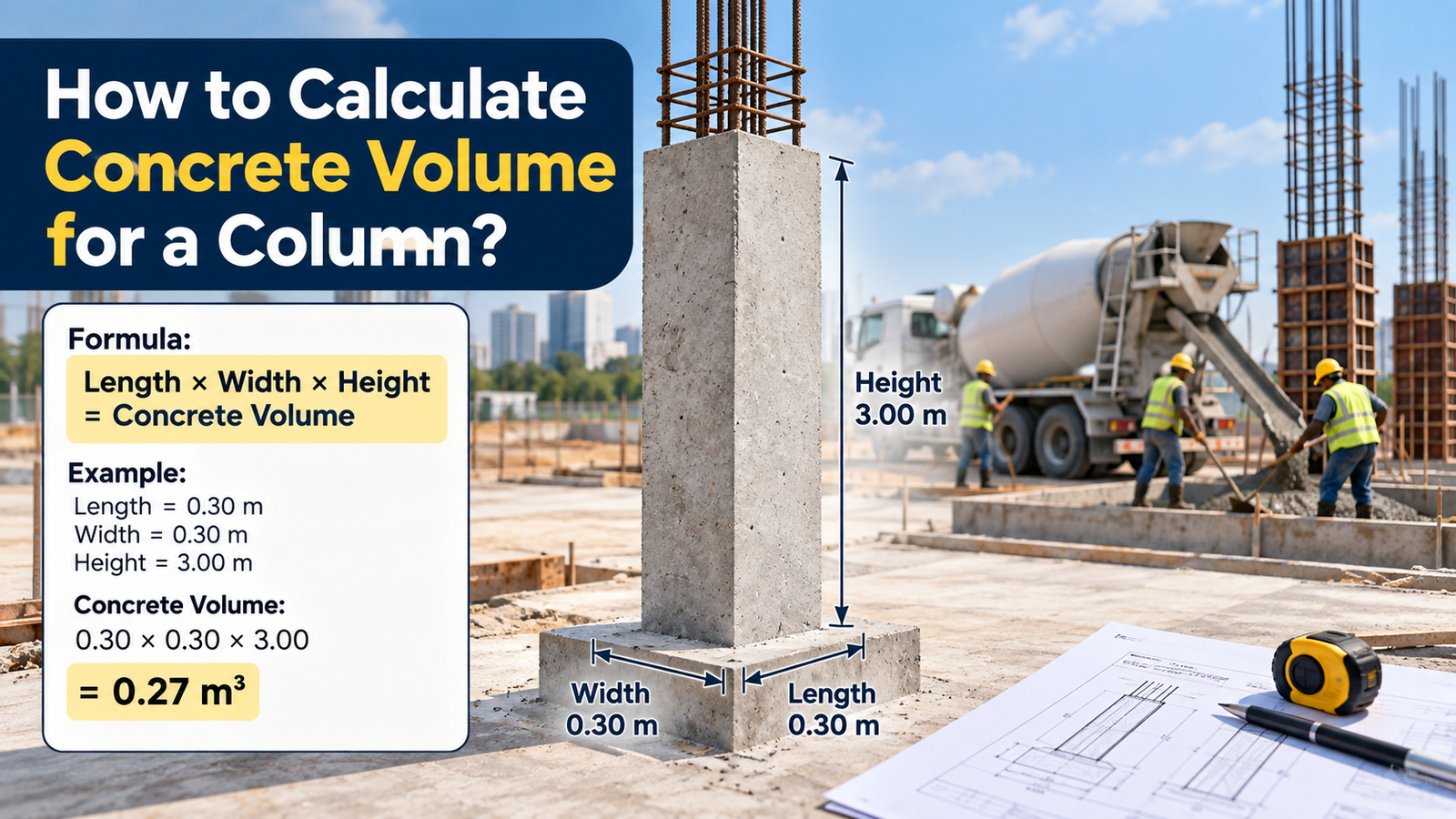
The basic formula for calculating the concrete volume of a rectangular or square column is:
Length × Width × Height = Concrete Volume
All dimensions should be converted into metres before performing the calculation.
For example, consider a column with the following dimensions:
The concrete volume will be:
0.30 × 0.30 × 3 = 0.27 m³
Therefore, one column with these dimensions requires approximately 0.27 cubic metres of concrete, before considering construction requirements or additional allowances.
If a building has multiple columns with the same dimensions, multiply the concrete volume of one column by the total number of columns.
For example, if one column requires 0.27 m³ of concrete and the building has 20 similar columns:
0.27 × 20 = 5.40 m³
Therefore, the calculated concrete volume for 20 columns is 5.40 m³.
If the columns have different dimensions, calculate each column separately and then add the individual volumes to determine the total concrete requirement.
Accurate concrete quantity calculation requires the actual dimensions and structural details of the columns.
The following information is generally required:
The structural drawings should be referred to when determining the final concrete quantity for a construction project.
The calculation method depends on the shape of the column. Square and rectangular columns are calculated using length, width and height. Circular columns require a different formula.
Square Column: Length × Width × Height
Rectangular Column: Length × Width × Height
Circular Column: π × Radius² × Height
The dimensions should be converted into metres before calculating the final concrete volume.
Suppose a rectangular column has a size of 0.30 m × 0.45 m and a height of 3.5 m.
The calculation is:
0.30 × 0.45 × 3.5 = 0.4725 m³
Therefore, the calculated concrete volume for one column is 0.4725 m³.
If there are 10 columns with the same dimensions:
0.4725 × 10 = 4.725 m³
The calculated volume for all 10 columns is therefore 4.725 m³.
Accurate quantity calculation helps construction teams plan concrete procurement, transportation and pouring activities more effectively.
An incorrect estimate can result in insufficient concrete during a pour or unnecessary excess material. Calculating the volume based on actual structural dimensions helps improve planning.
Before placing an order, the calculated quantity should be reviewed with the structural drawings and project requirements.
RCC Concrete provides Ready Mix Concrete solutions for residential and construction projects in Bangalore. Concrete requirements can be planned according to the project specifications, required grade and estimated quantity.
RCC Concrete can support construction requirements involving:
Proper quantity planning can help coordinate Ready Mix Concrete delivery with the construction schedule.
Once the concrete volume has been calculated, it is important to plan the concrete delivery according to the site requirements.
Before the concrete reaches the site, make sure that:
Proper preparation helps the concrete pouring process proceed smoothly and efficiently.
Quantity is not the only factor to consider when ordering concrete. The appropriate concrete grade should also be confirmed according to the structural design.
Concrete grades such as M20, M25, M30 and other grades have different strength specifications. The required grade should be selected based on the structural engineer's specifications and project requirements.
RCC Concrete can help arrange Ready Mix Concrete according to the specified project requirements.
Some common mistakes can affect the estimated concrete quantity. These include:
Checking the dimensions carefully before ordering concrete can help reduce quantity-related issues during construction.
In residential construction, columns may have different sizes depending on the structural design and number of floors. Therefore, the concrete requirement should not be estimated only from the total built-up area.
The number, dimensions and height of the columns should be considered when calculating the total concrete requirement.
For a complete estimate, column concrete should be calculated along with foundations, beams, slabs and other structural concrete elements.
Selecting a reliable Ready Mix Concrete supplier is an important part of construction planning.
RCC Concrete provides:
The goal is to make concrete procurement easier to coordinate with your construction schedule and project requirements.
Calculating the concrete volume for a column is a simple process when the correct structural dimensions are available. Multiply the column length, width and height to determine the basic concrete volume.
For multiple columns, calculate the volume of each column and combine the quantities. Always refer to the structural drawings and project specifications when determining the final concrete requirement.
RCC Concrete provides Ready Mix Concrete, transportation and pumping solutions for residential and construction projects in Bangalore.
Plan your concrete quantity, required grade and delivery requirements in advance for a smoother construction process.
RCC Concrete
Ready Mix Concrete | Transportation | Pumping
Call: +91 9611145965


